
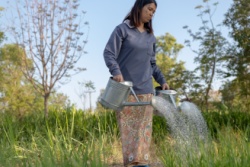
As May draws to a close, you might be preparing to get the lawnmower back out to tidy up the garden.
After all, once the weather improves, it’s only natural to want your outdoor space looking its best, as a freshly cut lawn can make the garden feel neater.
However, it might be worth thinking twice about doing so. No Mow May is a campaign started by Plantlife, encouraging people to avoid cutting their grass during May to allow wildflowers to bloom and pollinators to have access to more food.
While the campaign is nearly over, the wider message is still worth remembering throughout the summer.
You don’t have to leave your entire garden untouched all year, but even making a few small changes to how you manage your grass could support wildlife.
So, continue reading to learn how mowing your lawn less this year could make your entire garden more wildlife-friendly.
Leaving some grass longer could support struggling pollinators
One of the main lessons from No Mow May is that less frequent mowing gives common wildflowers the chance to bloom.
Plants such as daisies, clovers, dandelions, and buttercups might not always be welcome on your perfectly manicured lawn, but they can be valuable sources of nectar and pollen for insects.
This matters because pollinators are under pressure.
Indeed, the Joint Nature Conservation Committee reports that the UK pollinating insects indicator had declined by 23% in 2024 compared to its value in 1980.
It also found that, over the long term, 38% of pollinator species had become less widespread.
This is a concern because pollinators play a vital role in a healthy ecosystem. Bees, butterflies, and hoverflies all help plants reproduce, supporting wildflowers and fruiting plants.
When pollinator numbers decline, the effects can ripple through the environment, leading to fewer flowers, less food for birds and other wildlife, and a less diverse garden.
Leaving even one section of your garden slightly longer during the summer could mean you provide a more reliable food source for these essential insects.
Mowing less often can also make your garden easier to manage
Another practical benefit of carrying the spirit of No Mow May into the summer is that less mowing means less work.
During late spring and summer, your grass can grow incredibly quickly, and keeping it short often means cutting it every week or two.
Reducing how often you mow the grass could save you time and energy, especially if you have a larger garden.
It may also help your lawn cope better during hot, dry periods, as taller grass can shade the soil, helping it retain moisture for longer. This could reduce how quickly the lawn turns brown during dry spells.
You can still keep your garden looking cared for
If you’re concerned that your garden might look messy if you don’t cut the grass, there are still ways to make a wildlife-friendly lawn look intentional.
For instance, you could mow a path through longer grass, keep the front edge of the lawn trimmed, or create a defined meadow patch.
This could help show that the longer grass is deliberate rather than simply neglected.
You might also want to keep areas around patios, seating spaces, or washing lines shorter, while allowing less-used parts of the garden to grow more naturally.
This can be practical if you still want an outdoor space for relaxing, entertaining, or spending time with loved ones.
A mix of short and long grass can actually make your garden more interesting to look at, too.
Indeed, instead of one flat green surface, you may notice different textures, seed heads, and insects moving through the space.
Over time, this can make the garden feel more natural without making it unusable.
Even doing a little less can create these opportunities for wildlife. Raising your mower blades, for example, is a seemingly insignificant change that can make a big difference.
You might also want to avoid using pesticides where possible, as these can harm the insects you’re trying to support.
Remember: creating a more wildlife-friendly garden doesn’t require a complete redesign, as it can start with something as simple as changing how often you mow.
So, as No Mow May comes to an end, it might be worth resisting the urge to return to your old routine.
Get in touch
We can help you manage your finances, so you have more time to enjoy the garden this spring and summer.
To find out how we can help, please contact us by email at info@investmentsense.co.uk or call 0115 933 8433.
Please note
This article is for general information only and does not constitute advice. The information is aimed at individuals only.
All information is correct at the time of writing and is subject to change in the future.